


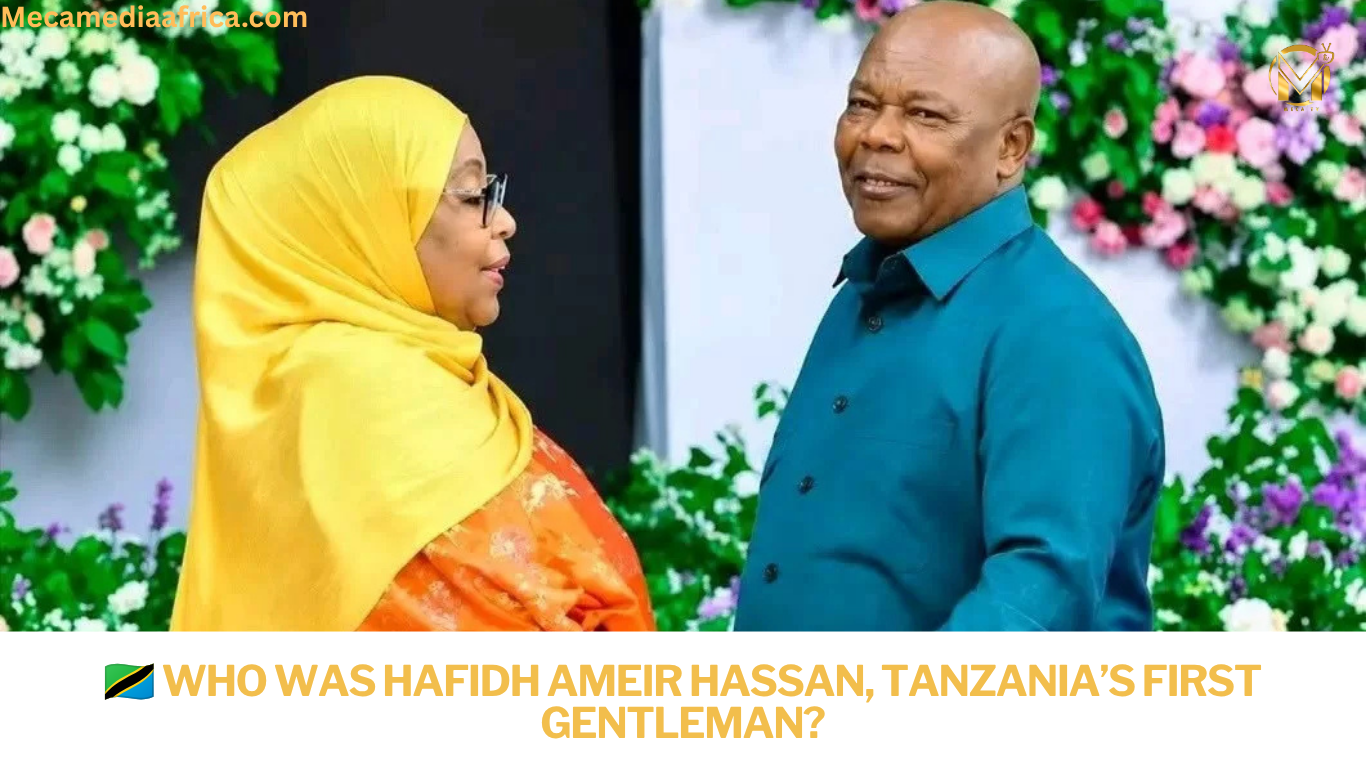
Hafidh Ameir Hassan was a Tanzanian agricultural specialist, former public servant in Zanzibar and the husband of President Samia Suluhu Hassan.
He became widely known as Tanzania’s first First Gentleman after Samia became the country’s first woman president in 2021.
Hafidh died in Zanzibar on September 7, 2026, while receiving treatment for a heart condition, prompting condolences from leaders across East Africa and the African Union.
Who Was Hafidh Ameir Hassan?
Hafidh Ameir Hassan was the husband of Tanzania’s president and a professional whose career was rooted largely in Zanzibar’s agriculture sector.
Unlike many presidential spouses, he maintained a relatively low public profile and generally stayed away from day-to-day political activity.
He and President Samia Suluhu Hassan had four children — three sons and one daughter.
Hafidh Ameir Hassan’s Death

Tanzania’s Vice President Deogratius Ndejembi announced that Hafidh died at about 8:00 AM East Africa Time on September 7, 2026.
Reports said he had been receiving treatment in Zanzibar for a heart condition.
The official announcement did not provide a more specific medical cause of death.
The African Union Commission also issued an official condolence message, describing Hafidh as Tanzania’s First Gentleman and expressing sympathy to President Samia, their family and the Tanzanian people.
Regional leaders, including Kenyan President William Ruto and Burundian President Évariste Ndayishimiye, were among those who sent condolences.
His Career in Agriculture and Public Service
Although Hafidh became internationally recognized because of his marriage to President Samia, his own professional life was closely associated with Zanzibar.
He worked as an agricultural specialist in the Zanzibar government’s agriculture sector before his wife became president.
Agriculture remains an important part of Tanzania’s economy and provides livelihoods for millions of people.
Hafidh, however, did not use his position to build a separate political identity.
He was widely described as private, supportive of his family and largely absent from major political activities.
Marriage to Samia Suluhu Hassan
Hafidh married Samia Suluhu Hassan in 1978, decades before she rose to the highest political office in Tanzania.
Their marriage lasted through Samia’s long journey in public service, including her roles in the Zanzibar government and eventually national politics.
Samia later became Tanzania’s vice president before assuming the presidency in March 2021 following the death of President John Magufuli.
That historic transition made her Tanzania’s first woman president and made Hafidh the country’s first widely recognized First Gentleman.
A Historic Role in Tanzania
Tanzania had previously known first ladies as spouses of male presidents.
Hafidh’s position was different because he became the first male spouse of a sitting Tanzanian president.
The title First Gentleman was ceremonial and did not give him executive or political authority.
His historical significance came from occupying a role Tanzania had never previously experienced while continuing to maintain a quiet public presence.
Family Life
President Samia and Hafidh had four children.
Their family life was generally kept separate from official government affairs.
Unlike some presidential spouses around the world, Hafidh was rarely at the center of public campaigns or political messaging.
That privacy became one of the defining characteristics of his public image.
Why Hafidh Ameir Hassan’s Role Was Significant
Hafidh’s place in Tanzanian history was not based on holding elected office.
Instead, his significance reflected the country’s historic transition to its first woman president and the emergence of a new type of presidential spouse role.
His experience also raised broader questions about how traditional ceremonial positions associated with heads of state evolve when a woman becomes president.
Hafidh appeared to answer that question through a low-key approach, remaining largely outside formal politics while supporting his family.
Hafidh Ameir Hassan Timeline
1978: Married Samia Suluhu Hassan.
Before 2021: Worked in Zanzibar’s agriculture sector.
2021: Samia Suluhu Hassan became Tanzania’s first woman president, making Hafidh widely known as the country’s first First Gentleman.
September 7, 2026: Died in Zanzibar while receiving treatment for a heart condition.
Frequently Asked Questions
Who was Hafidh Ameir Hassan?
Hafidh Ameir Hassan was a Tanzanian agricultural specialist, former Zanzibar public servant and husband of President Samia Suluhu Hassan.
When did Hafidh Ameir Hassan die?
He died on September 7, 2026, in Zanzibar.
What was Hafidh Ameir Hassan’s cause of death?
Officials said he had been receiving treatment for a heart condition. No more specific medical cause was publicly established in the initial announcement.
What work did Hafidh Ameir Hassan do?
He worked as an agricultural specialist in Zanzibar’s government agriculture sector.
Who was Hafidh Ameir Hassan’s wife?
His wife was President Samia Suluhu Hassan, Tanzania’s first woman president.
Did Hafidh Ameir Hassan have children?
Yes. He and President Samia had four children — three sons and one daughter.
Why was Hafidh called Tanzania’s First Gentleman?
He became widely known by that title after his wife became Tanzania’s first woman president in 2021.
The title was ceremonial and did not make him an elected government official.
Where was Hafidh Ameir Hassan expected to be buried?
Initial reports indicated that burial preparations were being made in the family’s native Zanzibar, including references to Kizimkazi.
Official announcements should be followed for final burial arrangements.
🇹🇿 Hafidh Ameir Hassan will be remembered as an agricultural professional, a private family man and the first man to occupy the historic position of First Gentleman of Tanzania.
more: https://mecamediaafrica.com/
✍️ Author: Mangwa

Mangwa mangwa
Mangwa Mangwa is the Founder of MECAMEDIA, a journalist, media professional, and political analyst committed to delivering credible news and meaningful stories from Africa and around the world. His work focuses on politics, leadership, business, community development, and current affairs, with a mission to inform, inspire, and connect communities through responsible journalism.